THE CROWNLEY BUYING GUIDE
Bag Dimensions Explained: Width, Height and Depth
Learn how to read bag dimensions, measure your everyday essentials and distinguish an outside size from usable interior space before choosing a shoulder bag.
4 minute read · Updated October 2026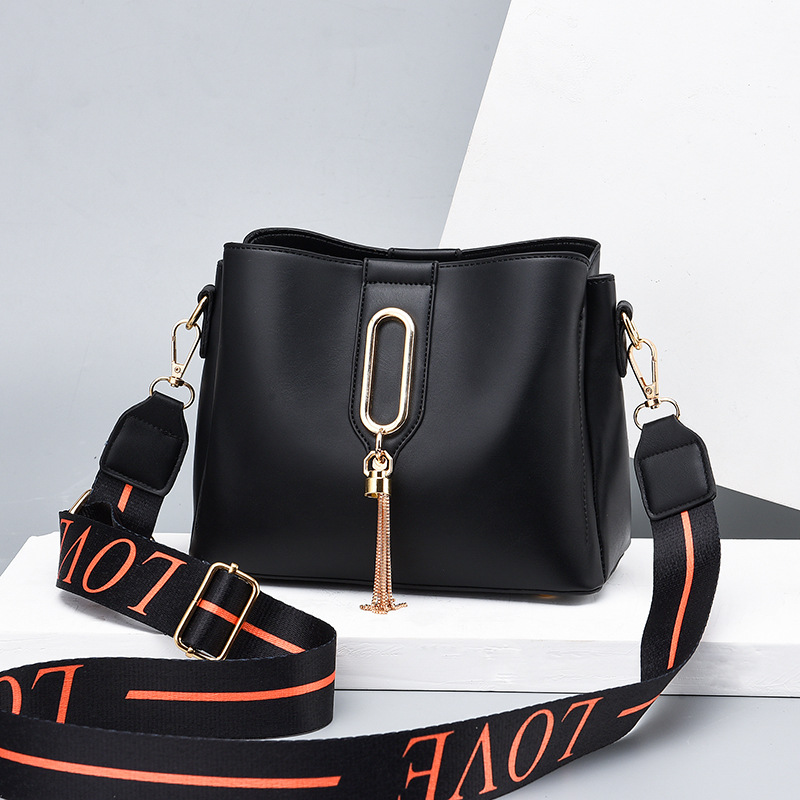 View the featured product ↗
Read the labels before comparing the numbers
A listing with three measurements is only useful when you know what each number describes. Width usually runs across the bag, height describes its body from bottom to top, and depth describes the space from front to back. Check the supplier diagram rather than assuming that every seller lists them in that order. A measurement may describe the widest point, the base or even the packaging. Handles and straps may be shown separately. Crownley’s Black Shoulder Bag with Wide Strap has a supplier style diagram stating 22 cm width, 17 cm height and 10 cm depth. These are exterior measurements, not a measured interior cavity. Start by writing down the labels as well as the numbers. If a listing gives three unlabelled values, ask which direction each one measures before using them to compare bags.
Measure the items you actually carry
Choose your essentials before deciding whether a compact bag is large enough. Measure your phone with its case attached, your closed wallet and any rigid glasses case you want to bring. Include a protruding camera cover or clasp in the measurement instead of checking only a manufacturer’s bare-device dimensions. Then think about the opening: an object that could sit inside a bag may still be awkward to pass through a narrow zip opening. Several items also need to fit together, not merely fit one at a time. Do not multiply the exterior dimensions and treat the result as usable storage volume. Seams, lining, dividers, rounded corners and the closure occupy space. An outside width greater than your phone’s length is a starting point for questions, not proof of compatibility.
Use a familiar bag as a practical reference
Take a bag you already own and place it on a flat surface without stretching or compressing it. Compare its outside width, body height and base depth with the labelled listing measurements. Also note the items it holds comfortably and how easily you can retrieve them. That gives you a physical reference for the proposed size. A paper rectangle drawn to the listed width and height can help you visualise the outer silhouette, but it does not recreate depth, a tapered opening or the interior. Keep strap length and strap drop on a separate note; they answer where a bag sits, not how much its body carries. If the familiar bag is soft and the new one appears structured, allow for the fact that the same outside dimensions can produce different usable shapes.
Check the missing measurements before ordering
For the current Black shoulder bag, the supplier describes a PU outer, polyester lining and zip-top opening. PU is synthetic, not genuine leather. The 22 × 17 × 10 cm diagram does not verify the interior dimensions, clear zip-opening width or strap drop. Ask for the specific measurement you need if one essential must fit. Do not substitute package dimensions or a different colour’s photograph as proof. The current Black / One Size option is the linked example, not a universal size recommendation. Use its product page for the current price and availability, and compare other bag formats in Crownley’s everyday-bags edit if you need more room. Read the published delivery and return conditions before ordering, including return eligibility and postage. Choose from confirmed details; a reassuring size label is not a replacement for the measurement that matters to your routine.