THE CROWNLEY BUYING GUIDE
Tie-Waist vs Wrap Dresses: Check the Fastening Details
A waist tie does not tell you how a dress opens. Compare front fastenings, overlapping panels and belt placement before choosing an Orange shirt dress.
4 minute read · Updated October 2026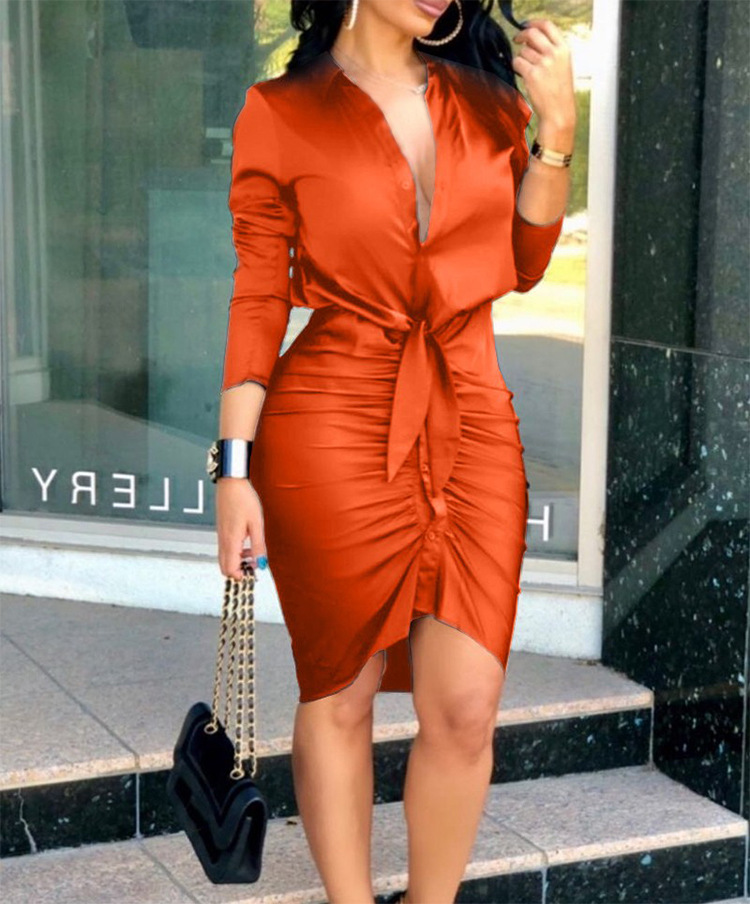 View the featured product ↗
A waist tie and a wrap opening do different jobs
A tie can shape the outside of a dress without being the fastening that holds the dress closed. That distinction matters when you are comparing a shirt dress with a wrap design. Start by following the front of the garment from neckline to hem. A row of buttons, a visible seam and overlapping panels can look similar in a small photograph, but they do not answer the same questions about getting dressed or adjusting the opening. The current Orange Long-Sleeve Shirt Dress with Waist Tie has a collar, a visible front placket and a tie across the waist in its matching supplier photograph. The supplier describes a single-breasted front. These details are not evidence that the skirt opens completely or that the tie releases a wrap panel. Treat tie-waist as a description of the visible waist detail, rather than a promise of adjustable coverage.
Check which parts actually open
For a button-front dress, ask which buttons are functional and how far the opening extends. Some designs open only at the bodice; others continue farther down the garment. A close view of a button is not enough to establish the full construction. For a wrap design, ask whether the front panels separate, where they attach and what secures them at the waist. A wrap-looking front can instead be fixed in place. Neither construction is automatically better: the useful choice is the one that suits how you want to put on and wear the garment. For the Orange option, the extent of the functioning front opening has not been verified. If you need a fully opening dress, do not assume that a collar, waist tie or supplier title proves it. Request a clear fastening description or a photograph showing the opening before ordering.
Separate belt adjustment from room in the garment
Look at where the tie begins and where it rests on the body. A separate belt, a sewn-in tie and a fixed knot create different styling possibilities. Ask whether the belt is detachable if you plan to replace it, remove it or wear the dress without a tie. That detail is unverified for the current Orange dress. Bringing fabric together at the waist does not add room across the shoulders, bust or sleeves. Choose the underlying garment fit before deciding how tightly to tie it. Then think about the movements you expect: sitting, reaching forward and walking. Where a design has overlapping panels, ask how those panels are secured during movement; where it has a button front, ask about the spacing and placement of the fastenings. A styled supplier photograph cannot establish comfort, freedom of movement or how the opening will behave on another wearer.
Use the exact offered option for the final comparison
The current Crownley listing offers Orange in S, M, L and XL, each mapped to a matching Orange supplier SKU. That identifies the colour and size labels available, not a standard regional fit or a verified adjustment range. The supplier lists polyester as the main fibre at 71–80 percent, without identifying the remaining fibres. There is no verified stretch percentage, lining, opacity test or product-specific washing instruction. Use the visible collar, front detail and waist tie to compare the look you want, and reserve construction-dependent decisions until the missing information is confirmed. The linked product page has the current price and availability; checkout confirms whether delivery is available for your destination. Read the delivery and returns policy before ordering. If a fully opening front or detachable belt is essential, an unanswered construction question is a reason to ask first, not a detail to infer from the presence of a tie.